IF A BABY OR CHILD IS CHOKING RIGHT NOW
1. Can they cough forcefully or cry? Stay close and let them cough.
2. Cough weak or silent, or no crying? Call 911 (UK: 999) or send someone to call.
3. Infant under one year: give 5 back blows, then 5 chest thrusts. Repeat. Never use abdominal thrusts.
4. Child over one year: give 5 back blows, then 5 abdominal thrusts. Repeat.
5. Child goes limp? Lower them to a firm, flat surface and start CPR with chest compressions.
Infant choking first aid is an essential skill for anyone who cares for babies and young children. Small airways, developing chewing skills, and a habit of putting everything in the mouth make children more vulnerable than adults. Their emergencies also call for different first aid.
Choking is not limited to mealtimes. Small toys, coins, balloon pieces, and other household objects can block a child’s airway during ordinary play. You do not need to feel anxious at every meal. You need to know the warning signs, follow age-appropriate guidance, and build a few safe habits.
This guide explains how to recognize choking in babies and children, how to respond using current pediatric first aid recommendations, how to tell gagging from a real blockage, and how to reduce food and household risks.
Emergency safety notice: If a baby or child cannot breathe, cry, speak, or cough effectively because of suspected choking, call 911 in the United States and begin age-appropriate first aid. In the United Kingdom, call 999. This article is educational and does not replace certified pediatric first aid training or professional medical advice.
KEY FACTS
• Infants under one year get 5 back blows and 5 chest thrusts. Abdominal thrusts can injure them.
• Children from about one year until puberty get 5 back blows and 5 abdominal thrusts.
• Gagging is a protective reflex. Severe choking means air is no longer moving.
• If a child becomes unresponsive, stop choking-specific steps and start CPR.
What Is Choking in Infants and Children?
Choking happens when something blocks the normal flow of air through the airway. Doctors call it foreign-body airway obstruction, or FBAO.
Food is one cause. Small objects are another. What matters is how much air still moves. With a mild blockage, a baby or child can keep coughing and making sounds. With a severe blockage, breathing is sharply restricted and the child needs help immediately.
Choking is different from ordinary coughing, trouble swallowing, and the gag reflex. These can all happen during feeding without signaling a dangerous blockage.
Age decides which first aid applies. The 2025 American Heart Association (AHA) and American Academy of Pediatrics guidelines separate infants (under about one year), children (from about one year until puberty), and adolescents with signs of puberty, who follow adult life support guidance.
Why Are Babies and Young Children at Risk?
Learning to eat takes time. Infants slowly improve their jaw movement, tongue control, chewing, and swallowing. In the early months of solid foods, these skills may not yet match every food shape or texture.
Small airways make the problem worse, because a small object can block them completely.
Babies and toddlers also explore with their mouths. An item that looks harmless to an adult can be the right size to block a child’s airway.
Risk depends on several things: developmental readiness, food texture, each child’s feeding skills, supervision, and the surroundings. Some infants, including those with developmental or swallowing difficulties, need individual feeding advice from their pediatric team.
Because children change quickly, precautions must change with them. A routine that suits a six-month-old will not suit a toddler.
How to Recognize Choking in a Baby or Child
Start by asking whether the child can move air. A sudden cough can look alarming, but coughing on its own does not mean you should step in physically.
The key is telling apart effective coughing, the protective gag reflex, and a severe blockage.
An infant with a blocked airway may stop feeding suddenly, make unusual breathing sounds, or struggle to cough or cry. Warning signs include a weak or absent cough, a cry that sounds weak or silent, visible difficulty breathing, and changes in alertness.
Skin color can change as oxygen drops. Never wait for a baby to turn blue before you act.
If the baby can cough forcefully or cry normally, air is still passing. If coughing becomes ineffective or the baby can no longer breathe or cry normally, they need help now.
Gagging is a protective reflex that moves food away from the back of the throat. It is common when babies try new textures. A gagging baby may cough, retch, push food forward with the tongue, and make noise. Their face may turn red.
Severe choking is different because air barely moves. The child cannot cough effectively, cry, or breathe normally.
Do not rely on the rule that gagging is loud and choking is silent. Look at the whole picture, especially airflow and alertness.
|
What you see |
Gagging |
Effective cough or mild blockage |
Severe choking |
|
Sound |
Often noisy |
Usually present |
Weak or absent |
|
Cough |
May occur |
Forceful and effective |
Ineffective or absent |
|
Airflow |
Generally maintained |
Still present |
Severely restricted |
|
What to do |
Watch closely |
Let them cough and monitor |
Start first aid and call emergency services |
Gagging is part of learning to eat. Persistent feeding trouble, repeated choking episodes, or breathing symptoms should be discussed with a pediatric healthcare professional.
Treat it as an emergency when the child cannot cough effectively, breathe, speak, or cry normally. You do not need to know what is stuck. The only question is whether enough air is moving. Our guide to a baby choking on food signs and what to do covers feeding-time symptoms in more detail.
What Should You Do First When a Baby or Child Is Choking?
Check whether the child is responsive and moving air.
If they cough effectively or cry normally, let them keep coughing and watch them closely. Forceful steps can make a partial blockage worse.
If they cannot breathe, cry, speak, or cough, treat it as a severe blockage. Call emergency services and begin the right rescue steps. If another adult is nearby, ask them to call 911 while you help. If you are alone, call on speaker and keep going.
|
Situation |
First response |
|
Coughing effectively |
Let them cough and watch closely |
|
Responsive infant under one year, severe blockage |
5 back blows, then 5 chest thrusts |
|
Responsive child about one year or older, severe blockage |
5 back blows, then 5 abdominal thrusts |
|
Becomes unresponsive |
Start CPR with chest compressions |
Stop choking-specific steps once the child becomes unresponsive. The response is now CPR.
Infant Choking First Aid: How to Help a Baby Under One Year
A responsive choking infant needs a different technique from an older child. The 2025 AHA and American Academy of Pediatrics guidelines call for repeated cycles of five back blows alternating with five chest thrusts, until the object comes out or the infant becomes unresponsive.
1. Confirm a severe blockage and call for help. The baby cannot cough, breathe, or cry effectively. Call 911 or send someone to call. Do not wait for blue skin.
2. Give five back blows. Lay the infant face down along your forearm, supporting the head and jaw with your hand. Rest your forearm on your thigh for stability. Keep the head lower than the chest. Do not press on the throat. With the heel of your free hand, deliver five separate, firm blows between the shoulder blades.
3. Give five chest thrusts. Turn the infant face up, supporting the head and neck, and keep the head lower than the body. Give five separate chest thrusts as described in the current AHA guidance. The 2025 update now uses the heel of one hand for infant choking chest thrusts, replacing the older two-finger technique, because research suggests it reaches greater depth.
4. Keep alternating. If the object is still stuck, turn the baby face down and give another five back blows. Continue until it comes out or the baby becomes unresponsive. Watch coughing, crying, breathing, and alertness the whole time.
5. If the baby goes limp, stop, lay them on a firm, flat surface, and start infant CPR.
Chest thrusts for a responsive choking infant are not the same as the chest compressions used in CPR. They serve different purposes and belong to different sequences.
Always support the baby securely. Practice the positions with a qualified first aid instructor and confirm hand placement against the official AHA illustrations. Written steps are not enough.
Why not abdominal thrusts for infants?
Abdominal thrusts, often called the Heimlich maneuver, are not recommended for babies under one year. They can press on abdominal organs and risk internal injury. This is the biggest difference between infant first aid and the technique used for older children. Our guide on how to help a choking baby under 1 year old explains the updated technique step by step.
Choking First Aid for Toddlers and Children Over One Year
At about one year, the recommended steps change. For a responsive child from about one year until puberty, the 2025 AHA pediatric guidelines recommend five back blows followed by five abdominal thrusts.
Signs in toddlers and older children
A child with a severe blockage cannot speak, cry, cough effectively, or breathe well. Older children may grab their throat or try to tell you something is wrong. Younger toddlers cannot explain.
If the child coughs forcefully and air moves, encourage them to cough and keep watching. Save forceful steps for a severe blockage. Do not use them every time a child coughs at a meal.
Five back blows, then five abdominal thrusts
1. Call for help. Call 911 or send someone to call.
2. Give five back blows. Support the child and help them lean forward. Deliver five separate blows between the shoulder blades with the heel of your hand.
3. Give five abdominal thrusts. Stand or kneel behind the child. Make a fist and place it above the navel and below the breastbone. Grasp it with your other hand and pull inward and upward, five separate times.
4. Keep alternating until the object comes out or the child becomes unresponsive. Follow the dispatcher’s instructions and recheck breathing as you go.
This technique is part of the sequence for children aged one year and older. Never use it on an infant under one year.
|
Situation |
Infant under one year |
Child from about one year to puberty |
|
Effective coughing |
Let them cough and watch |
Encourage coughing and watch |
|
Severe blockage, responsive |
5 back blows + 5 chest thrusts |
5 back blows + 5 abdominal thrusts |
|
Becomes unresponsive |
Start CPR |
Start CPR |
|
Blind finger sweep |
Never |
Never |
For a full explanation of abdominal thrusts and alternatives, read our choking rescue guide on the Heimlich maneuver.
What If a Baby or Child Becomes Unresponsive?
When an infant or child loses responsiveness during choking, switch from choking-specific steps to pediatric CPR.
Stop back blows and thrusts. Place the child on a firm, flat surface and make sure emergency services have been called.
The AHA recommends starting CPR with chest compressions. Lay rescuers do not need to check for a pulse first. Pediatric CPR also includes rescue breaths, which matter because cardiac arrest in children often begins with a breathing problem. Trained rescuers should follow the infant or child CPR procedure from their training.
When you open the airway to give breaths, look in the mouth. If you can see the object and can remove it safely, do so.
Never perform a blind finger sweep. Probing for an object you cannot see can push it deeper and make the blockage worse.
Learn full CPR technique, including compression depth, breaths, and ratios, in a recognized pediatric resuscitation course.
How to Prevent Food-Related Choking in Babies and Toddlers
Preventing food choking takes more than avoiding a short list of foods. Preparation, developmental stage, and the eating environment all matter. The Centers for Disease Control and Prevention (CDC) explains that certain foods become hazards because of their shape, size, texture, or stickiness.
Prepare food for your child’s stage
As babies start complementary foods, match preparation to what they can manage. Soften vegetables, mash firm foods, remove unsuitable parts, and cut foods into appropriate shapes.
A whole grape is a different challenge from a grape cut lengthwise. A hard raw carrot is harder to manage than a softened one. Revisit preparation as chewing and swallowing skills grow.
Cutting food smaller does not make it safe in every case. Texture, stickiness, firmness, and readiness still matter.
|
Food |
Concern |
What helps |
|
Whole grapes, cherry tomatoes |
Round shape |
Cut lengthwise into smaller pieces suited to the child |
|
Hot dogs, sausages |
Cylinder shape, dense texture |
Avoid thick round slices; modify appropriately |
|
Raw carrot, apple pieces |
Hard texture |
Cook, soften, mash, or prepare to suit the child |
|
Whole nuts and seeds |
Small, firm pieces |
Avoid for infants and young children |
|
Popcorn |
Irregular, hard-to-manage pieces |
Avoid in early childhood |
|
Thick spoonfuls of nut butter |
Sticky |
Spread thinly; avoid thick portions |
|
Large chunks of meat |
Hard to chew |
Offer softened or finely prepared portions |
|
Hard candy, chewy sweets |
Firm or sticky |
Avoid for young children |
Some foods stay risky for years, so ask your pediatrician when each one is appropriate for your child. Our toddler choking hazards food list covers more foods in detail.
Seat infants and toddlers upright in a secure high chair or other suitable position. Eating while lying down, crawling, walking, running, or playing adds risk.
The CDC also advises against feeding young children in strollers or moving vehicles. Keep mealtimes calm, allow time for chewing and swallowing, and never rush.
Stay with the child while they eat, even when the food is well prepared. As children become more independent, their ability to reach food can grow faster than their skill at handling every texture. Our choking hazards guide for foods, objects, and age-specific risks covers different ages and settings.
Baby-Led Weaning and Choking Risk
Baby-led weaning (BLW) is a way of introducing solid foods in which babies feed themselves instead of being spoon-fed purees. Parents are often unsure about its safety.
The CDC advises introducing complementary foods at around six months. Age is not the only sign. A baby should have good head and neck control, be able to sit with support, and show developing coordination for moving food in the mouth and swallowing.
These skills develop at different rates. Babies born prematurely or with feeding or developmental difficulties may need individual guidance from their pediatric team.
Whatever method you choose, the same safeguards apply: food softened and shaped to suit the baby’s abilities, an upright seated position, active supervision, and attention to your baby’s cues. Talk with your pediatrician before starting BLW, especially if your baby has any medical or feeding concern. Our article on baby-led weaning and choking risk looks at this question in more detail.
Preventing Non-Food Choking Hazards at Home
Food is only part of the picture. As babies begin to reach and crawl, ordinary household items come within reach.
Keep coins, marbles, small balls, pen caps, detachable toy parts, and other compact objects out of reach. Check floors, low furniture, sofa cushions, and shared play areas regularly. This is especially important in homes with older children, whose toys may contain parts that are unsafe for infants and toddlers.
Follow toy age labels when you buy, and inspect toys for loose pieces, broken attachments, or damage that exposes small parts. A label does not replace supervision. Our guide to choking hazard toys and age guidelines explains what to check.
Balloons, batteries, and magnets
Uninflated balloons and broken balloon pieces are well-known choking hazards for young children.
Button and coin batteries are a different kind of emergency. If swallowed, they can cause serious internal injury even when the child is breathing normally. Suspected battery ingestion needs immediate medical care. High-powered magnets can also cause severe internal injury when swallowed, especially more than one.
These are ingestion emergencies. Do not treat them with choking rescue steps when the airway is not blocked.
Consistent routines lower exposure to hazards and make emergencies easier to handle.
Parents, grandparents, babysitters, and other regular caregivers should all know the child’s feeding abilities, how to prepare food, and which household precautions apply. Consistency matters. A food one caregiver prepares carefully should not be served differently at another house.
Keep emergency contact information where everyone responsible for the child can find it.
Childcare settings should build choking prevention into their health and safety plans. Good practice includes supervised mealtimes, food prepared for each age group, regular toy checks, limits on access to hazardous objects, and a clear emergency procedure. Staff who feed infants should know the difference between infant chest thrusts and the abdominal thrusts used for older children.
Licensing and training rules vary by state, so providers should check the requirements that apply to them. Our daycare choking prevention policy guide covers what providers should consider.
Train before an emergency
Pediatric first aid and CPR courses from the American Heart Association and the American Red Cross let caregivers practice under professional supervision. Refresh your skills regularly, especially when guidelines change or when you begin caring for a child in a different age group.
What to Do After a Choking Incident
Removing the object does not rule out later complications. Medical assessment is recommended after a severe choking episode, especially when rescue maneuvers were needed.
Seek care for persistent coughing, trouble breathing, unusual behavior, chest or abdominal discomfort, or any worry about aspiration. A child who seems to breathe normally again may still need to be checked, depending on how severe the episode was.
Keep watching the child, and follow the advice of emergency responders or healthcare professionals.
Common Infant and Child Choking First Aid Mistakes
Many errors come from using a recognized technique in the wrong situation.
|
Mistake |
Why it matters |
|
Forceful steps while the child coughs effectively |
Can worsen a partial blockage |
|
Abdominal thrusts on an infant |
Risks abdominal organ injury |
|
Following outdated illustrations |
May conflict with current guidance |
|
Blind finger sweeps |
Can push the object deeper |
|
Giving water or food during severe choking |
Does not clear a severe blockage |
|
Delaying the emergency call |
Delays professional help |
|
Continuing thrusts after the child goes limp |
The needed response is now CPR |
|
Using a suction device in place of first aid training |
Can create false confidence and delay proven steps |
Always check airflow, age, and responsiveness before choosing a technique.
Can Anti-Choking Devices Be Used for Babies and Children?
Suction-based airway clearance devices are sometimes sold as extra preparedness equipment for homes with children. Their role depends on the evidence, the age they are intended for, and each product’s regulatory documentation.
How suction-based devices work
These devices create negative pressure to help pull an object out of the airway. That is different from back blows, chest thrusts, and abdominal thrusts, which apply force from outside the body.
In a safety communication updated March 4, 2026, the U.S. Food and Drug Administration (FDA) said established choking rescue procedures should come first. It describes anti-choking devices as a possible second option when standard techniques have failed. It also warns that preparing a device can delay lifesaving steps.
Are they suitable for infants?
The 2025 AHA and American Academy of Pediatrics guidelines say the evidence is not enough to establish the safety and effectiveness of suction devices in infants and children, and they do not make a general recommendation for their use.
A smaller mask does not show that a product has been clinically evaluated or authorized for babies. The FDA authorized one specific device in March 2026. That authorization applies to that product and its documented age indication. It cannot be applied to infants or to other manufacturers’ devices.
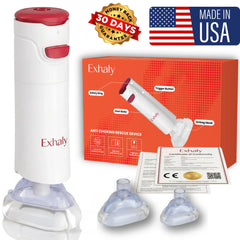
The Exhaly Anti Choking Device
The Exhaly Anti Choking Device is an automatic suction-based airway clearance device. It comes with adult, pediatric, and infant mask options. It is designed to be used as a second step, only after emergency services have been called and standard rescue steps for the child’s age have not cleared the airway. Mask size alone does not establish that a device is suitable for a given age, so check the intended age range in the manufacturer’s instructions and the regulatory documentation. It should never replace back blows, chest or abdominal thrusts, CPR, or a call to emergency services. For wider context, see how to choose among the best anti-choking devices.
Frequently Asked Questions About Infant and Child Choking Safety
How can I tell if my baby is choking or gagging?
Gagging is a protective reflex with noise, coughing, and movements that bring food forward. Severe choking sharply limits airflow, so the baby cannot breathe, cry, or cough effectively. Judge by airflow and alertness, not by skin color or noise alone.
What should I do if my baby is choking but can still cough?
Let the baby keep coughing and watch closely. Forceful steps can worsen a partial blockage. If the cough becomes ineffective or the baby can no longer breathe or cry normally, start the infant choking response and call emergency services.
Can you do the Heimlich maneuver on a baby under one year old?
No. Abdominal thrusts are not recommended for infants because they can injure internal organs. For a responsive infant with severe choking, alternate five back blows with five chest thrusts.
What is the correct first aid sequence for a choking toddler?
For a responsive child about one year or older with a severe blockage, give five back blows, then five abdominal thrusts. Keep alternating until the object comes out or the child becomes unresponsive, and call emergency services promptly.
Is gagging normal when babies start solid foods?
Yes, gagging can happen while babies learn to manage new textures. It is a protective response and does not automatically mean severe choking. Persistent feeding difficulty, repeated worrying episodes, or any sign of impaired breathing needs professional assessment.
Does baby-led weaning increase choking risk?
Safety depends on readiness, food preparation, and supervision more than on the feeding label. Talk with your pediatrician before starting, especially if your baby has medical or feeding concerns.
Which foods should babies and toddlers avoid?
Common hazards include whole grapes, hot dogs in round slices, whole nuts, popcorn, hard candy, hard raw vegetables, large chunks of meat, and thick spoonfuls of nut butter. Some can be modified by preparation. Others should be avoided until your child is developmentally ready. Ask your pediatrician about individual foods.
Are anti-choking devices safe for infants?
The AHA and American Academy of Pediatrics say the evidence is insufficient to establish their safety and effectiveness in infants and children. An infant-size mask does not by itself show that a product has been evaluated for babies. Confirm the intended age group and regulatory status of any specific device.
Should my child see a doctor after a choking incident?
Yes, after a severe episode, especially if rescue steps were needed. Ongoing coughing, breathing trouble, unusual behavior, or discomfort needs assessment. Looking recovered does not rule out complications from the blockage or the rescue.
Safer Habits, Better Preparation
Infant and child choking safety rests on three habits: recognizing a blocked airway, responding with first aid that fits the child’s age, and cutting down everyday hazards.
Babies and older children need different rescue steps, and feeding and household precautions should follow each child’s development. Hands-on pediatric first aid training gives caregivers the foundation to act.
For information covering every life stage, read our full choking safety and first aid guide.
• American Heart Association and American Academy of Pediatrics. 2025 Pediatric Basic Life Support Guidelines, including the section on foreign-body airway obstruction. https://cpr.heart.org/en/resuscitation-science/cpr-and-ecc-guidelines/pediatric-basic-life-support
• American Red Cross. Infant Choking. https://www.redcross.org/take-a-class/resources/learn-first-aid/infant-choking
• Centers for Disease Control and Prevention. Choking Hazards. Updated March 11, 2026. https://www.cdc.gov/infant-toddler-nutrition/foods-and-drinks/choking-hazards.html
• U.S. Food and Drug Administration. FDA Encourages the Public to Follow Established Choking Rescue Protocols. Updated March 4, 2026. https://www.fda.gov/medical-devices/safety-communications/update-fda-encourages-public-follow-established-choking-rescue-protocols-fda-safety-communication
Exhaly Automatic Anti-Choking Rescue Device
Vacuum-based airway clearance device for the home.
$41.99
$60.00
FDA Registered · Made in USA