IF AN OLDER ADULT IS CHOKING RIGHT NOW
1. Can they cough forcefully, speak, or breathe? Stay close and encourage coughing.
2. Cough weak or silent, cannot speak or breathe? Call 911 (UK: 999) or send someone to call.
3. Give 5 back blows, then 5 abdominal thrusts. Repeat until the object comes out.
4. Cannot reach around their abdomen, or the person is pregnant? Give 5 back blows, then 5 chest thrusts.
5. Person goes limp? Lower them to a firm, flat surface and start CPR with chest compressions.
A choking emergency at work, in a restaurant, or at school is not only a first aid issue. It is also an organizational preparedness issue.
When a severe airway obstruction occurs, the people nearby may need to recognize the emergency, call 911, begin appropriate first aid, direct emergency medical services to the correct location, and coordinate with other staff within a short period of time.
That makes preparation more important than simply displaying a choking poster or storing emergency equipment somewhere in the building.
An effective workplace choking emergency procedure should connect training, staff responsibilities, emergency communication, first aid supplies, building access, and post-incident review. Schools and food-service businesses require additional planning because the population, environment, and types of emergencies they encounter may be different from those of a general office.
Organizations also need to distinguish between what federal law actually requires, what recognized safety organizations recommend, and what they voluntarily choose to implement as good practice.
Emergency Safety Notice
If someone cannot breathe, speak, cry, or cough effectively because of suspected choking, activate emergency medical services and begin appropriate age-specific first aid according to current guidance. In the United States, call 911. Organizational policies and emergency equipment should support established first aid, not delay it.
This guide provides general preparedness information. Federal, state, local, industry-specific, licensing, and institutional requirements may differ.
What Should a Workplace Choking Emergency Procedure Include?
A useful procedure should be simple enough that employees can understand it during a stressful event.
It does not need to turn ordinary employees into medical professionals. Instead, it should make clear how a possible airway emergency is recognized and how the organization responds.
A practical framework can be organized into six stages.
1. Recognize a Possible Airway Emergency
Staff should understand the difference between a person who can still cough effectively and someone experiencing possible severe airway obstruction.
If a person can cough forcefully and move air, unnecessary physical intervention may worsen the situation.
An inability to breathe, speak, cry, or cough effectively should be treated as an emergency.
Employees do not need to identify the exact object causing the obstruction before activating the response.
2. Call 911
The procedure should clearly explain who can contact emergency services and how the caller should communicate the person's location.
Employees should not be required to locate a manager or obtain permission before calling 911 for an obviously life-threatening emergency.
In large facilities, the plan should also establish how security, reception, or another employee will meet emergency responders.
3. Begin Appropriate First Aid
Employees with relevant training should follow current age-appropriate choking first aid.
The organization's written procedure does not need to reproduce an entire medical training course. It should identify which trained personnel are expected to respond and direct employees toward recognized procedures.
For practical choking first aid information, Exhaly's choking rescue guide covering the Heimlich maneuver and alternative techniques provides additional educational context.
4. Respond to Loss of Responsiveness
If the person becomes unresponsive, the response changes.
Trained responders should transition to CPR according to their training and current clinical guidance while emergency medical services are on the way.
5. Coordinate EMS Access
Calling 911 does not guarantee that responders will immediately know how to reach the affected person.
Organizations should consider locked entrances, elevators, security gates, room numbering, multiple floors, warehouses, campuses, outdoor areas, and customer-only spaces.
6. Review the Incident
After immediate medical needs have been addressed, the organization should document the event according to its policy, replace used supplies, and evaluate whether the emergency procedure functioned as intended.
The purpose of review is improvement rather than blame.
What Does OSHA Actually Require?
One of the most common mistakes in workplace safety content is converting sensible first aid practices into claims that “OSHA requires” them.
The federal baseline is more specific.
Under 29 CFR 1910.151, employers must ensure the ready availability of medical personnel for advice and consultation on workplace health matters.
When an infirmary, clinic, or hospital used to treat employees is not in near proximity to the workplace, the standard requires one or more people to be adequately trained to provide first aid. Adequate first aid supplies must also be readily available.
That does not create a universal federal rule requiring every employee to be first aid certified.
It does not establish one required number of trained employees for every workplace.
And the general standard does not create a universal requirement that every business maintain a dedicated anti-choking device.
The appropriate first aid program depends on the workplace.
An office with 12 employees on one floor may have different needs from a warehouse operating three shifts across several buildings. A remote worksite may require different coverage from a business located next to an emergency medical facility.
Some industries are also subject to more specific OSHA standards that contain additional first aid or CPR requirements.
Employers should therefore evaluate the requirements applicable to their actual operations rather than relying on broad statements such as “OSHA requires every business to do X.”
Does OSHA Require Annual CPR Training?
The general first aid standard does not establish a universal annual CPR recertification requirement.
OSHA has stated that refresher intervals are not universally mandated under 1910.151, although its workplace first aid guidance supports regular refresher training for life-threatening emergencies.
Organizations must also consider the renewal requirements of the training program they use and any industry-specific standards that apply to their workers.
The distinction is important:
Recognized safety practice is not automatically the same as a federal legal requirement.
Who Should Be Trained?
The better question is not “How many people does OSHA require us to certify?”
It is:
Will someone capable of responding actually be available when an emergency occurs?
Organizations should consider workforce size, shifts, floor plans, remote work areas, customer traffic, dining areas, expected EMS access, and employee turnover.
A workplace with one first aid-trained employee may technically appear prepared on paper but have little practical coverage if that employee works only during the day while the facility operates around the clock.
Schools face a similar issue. A school nurse may provide important clinical expertise, but organizations should not assume every school has a full-time nurse available in every part of the campus.
Restaurants should consider whether trained personnel are present during every operating shift.
Training should also match the population.
Childcare settings require pediatric knowledge. Schools may serve different developmental age groups. Most ordinary workplaces primarily need adult first aid skills.
Hands-on training is preferable to relying entirely on posters, videos, or written policies. Employees should understand not only the physical first aid response but also how the organization's internal emergency system works.
Build the Policy Around Roles, Not Paperwork
A workplace choking policy should define responsibilities without becoming a lengthy manual employees cannot use during an emergency.
The administrative document can contain detail, but the emergency-facing procedure should remain simple.
At minimum, the policy should address:
Scope: Which facilities, employees, students, customers, contractors, or visitors are covered?
Recognition: What basic signs should trigger emergency action?
Emergency communication: Who calls 911 and how is the exact location communicated?
First aid: Which trained responders are expected to provide assistance?
Internal alerts: How are security, management, health personnel, or first aid teams notified?
EMS access: Who meets responders and guides them through the facility?
Equipment: Where are first aid supplies and other approved emergency resources located?
Special populations: Are children, individuals with known swallowing difficulties, or people with disabilities present?
Documentation: What information should be recorded after immediate care is complete?
Review: Who examines the incident and updates procedures if a weakness is identified?
The best policy is not necessarily the longest one. It is the one staff can realistically follow.
Choking Safety in Restaurants
Restaurants have an obvious operational reason to include choking in emergency planning: customers are actively eating throughout business hours.
Front-of-house staff may be the first employees to notice that a customer is experiencing difficulty.
Training should help staff distinguish severe choking from ordinary coughing, contact 911 promptly, summon a trained responder, and avoid unsafe improvised techniques.
Roles can also be planned in advance.
One person may provide first aid while another calls emergency services. A manager may clear surrounding space, while another employee directs EMS from the entrance to the correct table.
Physical layout deserves consideration.
Private dining rooms, patios, upper floors, kitchens, event spaces, and crowded dining areas can all affect response.
A choking poster can be useful as reinforcement, but it should not be mistaken for practical staff training.
Restaurants also need to verify their state and local rules. Some jurisdictions impose specific first aid, signage, emergency equipment, or training requirements.
A requirement in one state should never be presented as a nationwide restaurant mandate.
Choking Safety in Schools
Schools should generally integrate choking into their broader medical emergency and Emergency Operations Plan rather than create an entirely separate safety system.
Relevant personnel may include teachers, cafeteria workers, coaches, nurses, administrators, office staff, and other trained employees.
Age differences matter.
The choking response used for an older teenager is not necessarily identical to the procedure used for an infant in a childcare environment.
School planning should therefore consider the age groups actually present.
Cafeterias deserve particular attention because eating is concentrated within a defined period and location. Staff awareness, responder access, emergency communication, and supervision can all influence preparedness.
Schools should also distinguish choking from other breathing emergencies.
Anaphylaxis caused by a food allergy and foreign-body airway obstruction may both involve severe respiratory distress, but they require different recognition and response.
Some students may also have documented swallowing difficulties, neurological conditions, or developmental needs. Their individualized health plans should be coordinated with broader school procedures rather than replaced by a generic choking policy.
Exercises and policy reviews can help identify practical gaps without creating unnecessarily frightening simulations for students.
First Aid Supplies Must Be Accessible
OSHA's requirement that first aid supplies be readily available should be translated into real operational planning.
A kit locked inside an office accessible only to one manager may be poorly positioned for an emergency occurring on another floor or during another shift.
Organizations should evaluate facility size, locked areas, security controls, remote buildings, cafeterias, outdoor areas, and customer-facing spaces.
There is no universal distance that makes a first aid kit appropriate for every workplace.
The practical question is whether intended responders can reach necessary supplies when they need them.
Supplies should also be inspected periodically for missing items, damaged packaging, expiration dates where applicable, and changes in workplace needs.
Purchasing a particular kit does not, by itself, create an effective first aid program.
Should a Workplace or School Keep an Anti-Choking Device?
Organizations may decide to evaluate supplementary airway-clearance equipment as part of a broader emergency preparedness program.
That decision should come after the organization has addressed training, 911 activation, responder coverage, first aid procedures, and equipment accessibility.
Suction-based anti-choking devices should not replace established first aid, CPR, or employee training.
They should also not delay the response while someone searches for equipment.
If an organization is considering a device, procurement teams should evaluate several practical questions:
Who is expected to use it?
For which age groups is it intended?
Where will it be stored?
Can staff reach it quickly?
Have intended responders reviewed its operating instructions?
Does it require maintenance or replacement?
How will it be incorporated into existing emergency procedures?
Will new staff receive familiarization?
Who is responsible for periodic equipment inspection?
Organizations should also remember that purchasing emergency equipment does not automatically establish OSHA compliance, school-safety compliance, or immunity from liability.
Equipment supports a system. It does not create the system.
Where Exhaly Fits Into an Institutional Preparedness Program
For businesses, schools, restaurants, care environments, and other organizations that choose to evaluate supplementary choking equipment, Exhaly can be considered as one component of a wider response program.
Its automatic spring-powered mechanism is designed to generate the suction action without requiring the rescuer to manually pull a plunger. The device does not rely on batteries or an electrical connection.
For institutional buyers, those design characteristics may be relevant when considering physical operation, storage, staff familiarization, and deployment across multiple locations.
They should not be interpreted as proof that equipment eliminates the need for training or established choking first aid.
Organizations evaluating supplementary equipment can review the Exhaly Automatic Anti-Choking Rescue Device alongside their existing emergency procedures, staff coverage, and procurement requirements.
For schools, restaurants, care facilities, or other organizations seeking multiple units, procurement should also consider placement, replacement processes, staff familiarization, and consistency across different sites.
Build a Training Program That Survives Staff Turnover
A safety program cannot depend on the same employees remaining in place indefinitely.
Organizations should identify who is likely to encounter emergencies, select recognized first aid training appropriate to that population, and integrate emergency orientation into onboarding where appropriate.
Practical training should cover more than the physical choking maneuver.
Employees should know who calls 911, how trained responders are contacted, where emergency supplies are stored, which entrance EMS should use, and what happens after the incident.
Regular review is also important.
A procedure written three years ago may no longer match the building layout, staffing model, or current clinical guidance.
Training coverage should therefore be reviewed after staff turnover, facility expansion, changes in operating hours, or significant changes to the people the organization serves.
What Should Happen After a Choking Incident?
Immediate medical care comes first.
Once the emergency has been transferred to healthcare professionals, the organization can review what happened.
Relevant questions include:
Was 911 activated promptly?
Did employees recognize who was responsible for first aid?
Could responders access the person quickly?
Did staff know where supplies were located?
Could EMS find the correct entrance and room?
Was any equipment difficult to access?
Did the procedure create confusion?
Were additional medical or population-specific considerations identified?
Used supplies should be replaced, equipment inspected according to its instructions, and factual incident documentation completed according to organizational policy.
The purpose of an after-action review should be to strengthen the system rather than assign unnecessary blame.
Workplace Choking Emergency Procedure Checklist
A practical institutional procedure can be summarized as:
Recognize
☐ Determine whether the person can breathe, speak, cry, or cough effectively.
☐ Treat severe inability to move air as an emergency.
Call
☐ Activate 911.
☐ Provide the exact facility and internal location.
☐ Alert trained responders.
Respond
☐ Use current age-appropriate first aid.
☐ Do not perform blind finger sweeps.
☐ Do not delay first aid while retrieving optional equipment.
Coordinate
☐ Clear the surrounding area.
☐ Assign someone to meet EMS.
☐ Retrieve appropriate emergency supplies when relevant.
Escalate
☐ Transition to CPR if the person becomes unresponsive, according to current training.
Review
☐ Address medical follow-up.
☐ Document the incident.
☐ Replace used supplies.
☐ Review the organization's response.
This checklist is a planning aid, not legal advice or a substitute for certified first aid education.
Frequently Asked Questions
Does OSHA require every employee to know how to respond to choking?
No universal federal rule requires every employee in every workplace to be choking-trained. Employers must assess their applicable first aid obligations and ensure adequate first aid capability under the circumstances.
Does OSHA require annual CPR certification?
The general 1910.151 standard does not establish a universal annual CPR recertification interval. Industry-specific requirements and training-provider certification rules may differ.
How many employees should be first aid trained?
There is no universal ratio suitable for every workplace. Staffing, shifts, facility size, workplace hazards, customer presence, and proximity to professional medical care should inform coverage.
Does OSHA require an anti-choking device?
The general first aid standard does not establish a universal requirement for workplaces to purchase suction anti-choking devices.
Should restaurants train staff for choking emergencies?
Choking is directly relevant to food-service operations, so staff recognition and emergency planning can be a valuable preparedness measure. Businesses should also verify applicable state and local requirements.
Should schools have a choking procedure?
Schools can incorporate choking response into their wider health and emergency operations procedures, including responder roles, communication, age-specific first aid, EMS access, and individualized student needs.
Prepared Institutions Depend on Systems, Not a Single Product
Institutional choking preparedness works best when people, training, policy, communication, emergency services, and accessible supplies operate as one system.
A poster cannot create preparedness by itself.
Neither can a first aid kit.
And supplementary choking equipment cannot substitute for trained people and a workable emergency response procedure.
Organizations should first understand the requirements that genuinely apply to them, identify who needs to respond, establish clear emergency communication, and make sure first aid coverage exists when the facility is actually operating.
Equipment can then be evaluated as one additional part of that system.
The goal is not to create the longest safety policy.
It is to make sure that if a severe choking emergency occurs, the people present know what to do next.
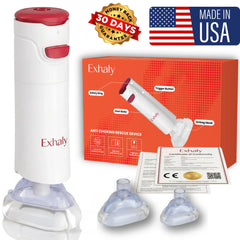
Exhaly Automatic Anti-Choking Rescue Device
Vacuum-based airway clearance device for the home.
$41.99
$60.00
FDA Registered · Made in USA